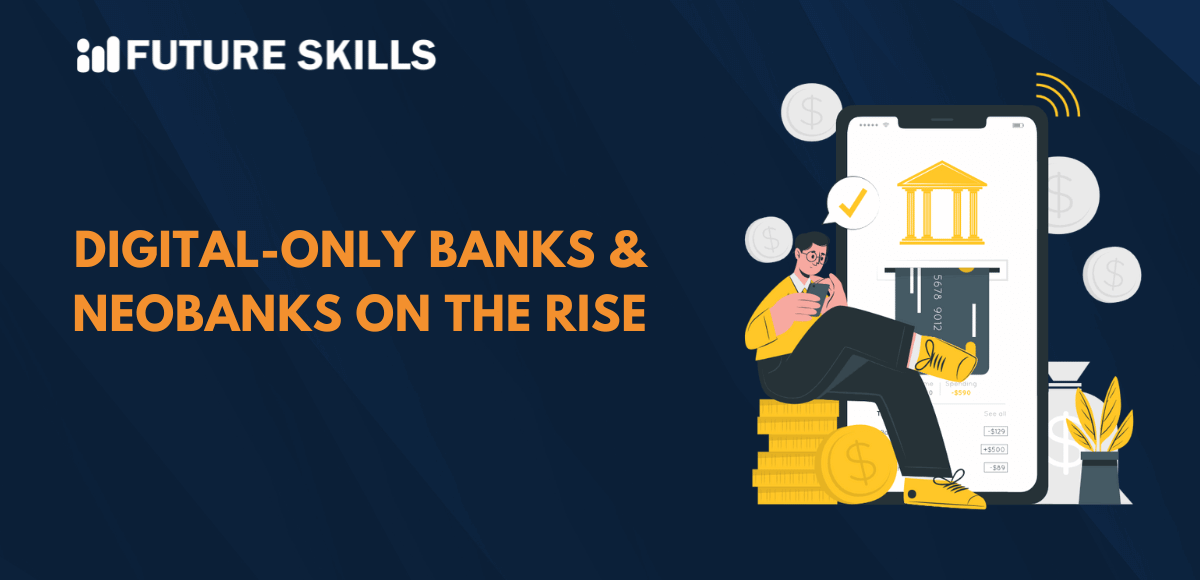

Today’s era is witnessing a quick technological advancement along with changing consumer preferences. These changes have made traditional banking institutions face plenty of challenges to meet the customers’ requirements. So, now the emergence of neobanks has been redefining the banking experience. As per Fortune Business Insights, the global neobanking market size is growing to reach USD 3,406.47 billion by 2032. So, digital-only banks and neobanks channelize complete online operations without any physical branches.
The following platforms include seamless user interfaces, innovative features, and personalized services. Further, they incorporate faster services with lower charges while offering convenience and transparency to their customers. Neobanks are turning out to be a powerful alternative to traditional banking systems globally. This blog highlights all the essential details related to neobanks and how they are fueling the fintech industry.
Understand how fintech is revolutionizing finance and develop a career with our Fintech Certification Program. Enroll now!
How Do Digital Only Banks and Neobanks Differ from Traditional Systems?
Digital-only banks or neobanks are recent financial institutions that offer banking services exclusively through digital platforms like mobile applications and web interfaces. They don’t require any physical setups to serve customers. On the other hand, traditional systems need to go through rigorous paperwork and require a suitable infrastructure. But digital-only banks and neobanks abide by automation and futuristic mechanisms.
- It allows you to open an online account and be onboard completely through digital means.
- It ensures a mobile-first customer experience to satisfy the audience anytime.
- The platforms leverage faster transactions and real-time insights along with lower operational charges.
This innovation-led model is why digital-only banks are gaining traction among the youth and tech-savvy customers.
How Do Digital-Only Banks or Neobanks Access?
Digital-only banks mainly access through modern infrastructure. To accelerate the banking experience, it uses the potential of AI tools and APIs. So, you can manage everything online, starting from your account opening to checking the expenditure.
- The process involves online registration with proper KYC verification.
- Your account will be activated instantly.
- You can initiate app-based money transfers and bill payments.
- Most importantly, you can get real-time spending analytics and alerts.
Because of such efficiency, many customers stick to such platforms for their everyday banking requirements.
Enroll in our unique Fintech Course and learn fintech fundamentals and their impact on traditional financial services.
Why Neobanks are Growing Rapidly in the Recent Age?
Digital-only banks and neobanks are growing rapidly as they align perfectly with how modern consumers want to manage their money. The recent era is all about quick, secure, and frictionless transactions that are possible through digital-only banks. Their growth is driven by a combination of technology, cost efficiency, and customer expectations. Some of their incredible advantages have been given here.
1. The Convenience of Anytime and Anywhere Banking
Digital-only banks neobanks, allow customers to open accounts or pay bills while monitoring their spending from their smartphones. So, it eliminates the need for standing in long queues. The 24/7 accessibility fits seamlessly into the recent lifestyle of working professionals and youngsters.
2. Quick and Paperless Accessibility
Starting from prompt account opening to real-time updates, digital-only banks restrict time-consuming paperwork. More such beneficial features include automated approvals and digital KYC that reduce processing timelines. This quickness not only satisfies a customer but also allows the banking organizations to scale quickly through multiple regions.
3. Minimal Fees but Better Value
As digital-only banks and neobanks don’t need to deal with overhead charges of maintaining physical branches and multiple staff, they can offer reduced service fees or no-fee accounts. Customers can get the benefits of high-interest rates for the savings they make, and the process remains highly transparent with low charges. This cost advantage makes digital-only banks and neobanks a desirable choice in the current scenario.
4. Personalized Banking Experience
Digital-only banks thoroughly verify data and use AI to study customers’ behavior while offering them financial insights. Some eminent features, like product recommendations and budgeting elements, can rectify your financial decisions as well. Further, these custom approaches can build trust while fueling long-term engagement.
Enroll now in the AI and Fintech Course to familiarize yourself with the best practices for implementing AI and fintech solutions.
What is an Example of a Neo bank?
One of the common queries that people often ask is, what is an example of a neo bank? So, a series of national and international platforms have adopted this model. In this section, let us discover some of the best digital-only banks neobanks.
-
Revolut
This platform expanded its growth throughout the U.S. in 2020 and has over 50 million users.
-
Varo
It has around 7 million customers and requires no credit check, no monthly overdraft fees, and no minimum balance requirements.
-
Monzo
This is a UK-based digital bank that features strong budgeting tools.
-
Jupiter
It is a digital-first banking application that prioritizes smart finance management.
So, if you are wondering what is an example of a neo bank, these are some leading platforms to think about.
Drawbacks of Neobanks
Neobanks are known for their potential speed and easy-to-use features. But they have some limitations.
-
Limited Cash Handling
Most neobanks don’t support in-branch services or cash deposits. This might hamper an individual who desires cash transactions.
-
Depends On the Internet Facilities
Neobanks work efficiently when connected through online features. So, to access the services, you need stable internet accessibility. A single technical glitch or connectivity issue can completely hamper your banking activities.
-
Restricted Product Offerings
As compared to traditional banks, some neobanks offer a minimal range of financial products. Services like major loans and proper finance management might be absent in such models.
-
Regulatory demands
Not all digital-only banks neobanks operate through complete banking licenses. Some function through partnerships with traditional banks. This approach might raise concerns related to deposit protection and long-term stability for cautious consumers.
Learn some important Fintech Interview Tips that can help you qualify a fintech interview to land your dream job.
The Overpowering Aspects of Digital-only Banks over Traditional Banks
Neobanks majorly challenge the traditional banking systems by featuring a range of innovative elements. Traditional banks mostly prioritize manual processes. But digital banks always strive for real-time analysis and automated characteristics. This valuable change is making traditional banks adopt digital-first approaches for long-term value.
Career Opportunities You Can Expect in Fintech Industries
The growth of digital-only banks and neobanks has been demanding professional minds. Roles have now shifted beyond finance into data, technology, and compliance. Some of the most in-demand career paths include Fintech product manager, compliance and risk specialist, digital banking operations analyst, etc.
So, if you are wondering how to prepare for a career in this line, learning Fintech fundamentals is necessary. This includes shaping a good knowledge of open banking systems, digital payments, regulatory technology, cybersecurity, etc. Developing such skills can make you understand the leading digital models from the core. Further, you can analyze the fintech innovations critically. Most importantly, you can adopt financial technology changes rapidly without getting confused.
Conclusion
The future of banking is undoubtedly digital. So, the best digital-only banks neobanks, are evolving continuously while redefining customer expectations and financial access while leveraging innovative standards. No matter if you are a consumer exploring better banking facilities or a professional who demands to extend their career in the Fintech industry, understanding such concepts has become necessary.
If you are trying to boost your knowledge about Fintech models or digitally-versed financial systems, join the Certified Fintech Expert (CFTE) program by Future Skills Academy. This industry-led certification course can make you strong in your practical knowledge while helping you understand the core concepts of the financial landscape. Further, you need to understand that the regulatory requirements will change continuously to balance consumer requirements and innovations. So, as compliance standards mature and digital trust broadens, neobanks are expected to play a crucial role in shaping technology-driven financial systems globally.

About Author

David Miller is a dedicated content writer and customer relationship specialist at Future Skills Academy. With a passion for technology, he specializes in crafting insightful articles on AI, machine learning, and deep learning. David's expertise lies in creating engaging content that educates and inspires readers, helping them stay updated on the latest trends and advancements in the tech industry.