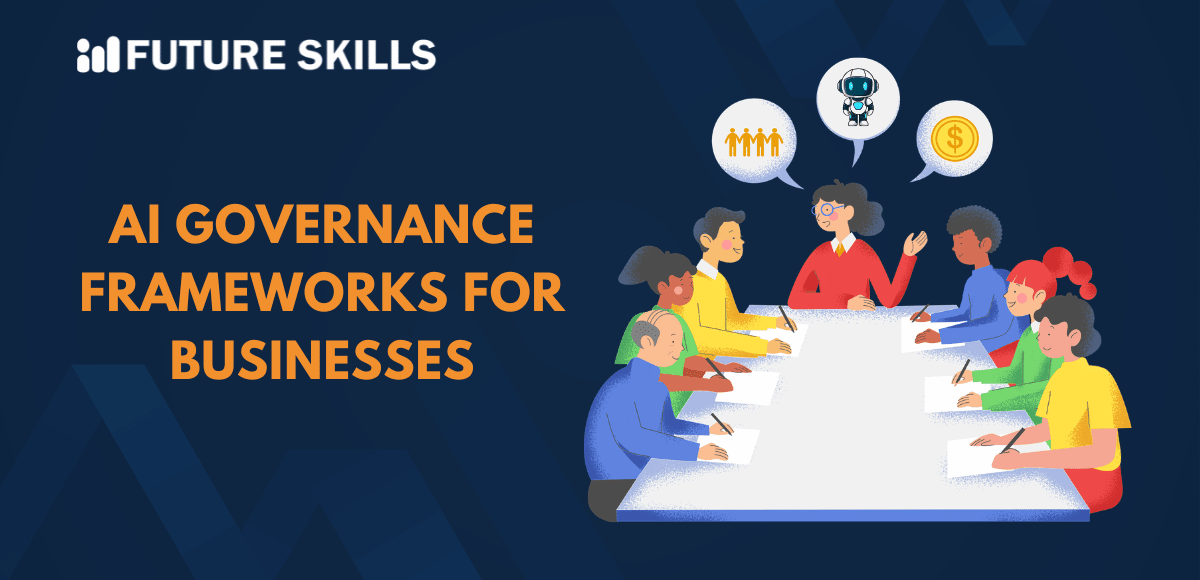

The staggering growth in AI adoption has become one of the biggest highlights in the tech landscape. The latest global survey by McKinsey has revealed that 88% of participating organizations used AI in at least one business function (Source). However, the growing adoption of AI has drawn attention towards AI governance frameworks as increasing AI usage brings real exposure. Incomplete or inaccurate data for AI models can lead to unfair decisions while weak data pipelines can lead to leaks in sensitive information.
AI governance can help businesses transform a highly volatile yet powerful technology into a reliable, secure and auditable asset. According to the 2026 Data and Privacy Benchmark study by Cisco, 75% of organizations claimed that they have dedicated AI governance processes (Source). The problem here is that only 12% of organizations believe that their AI governance is proactive and mature. These numbers showcase a huge difference between the need to have AI governance and effective implementation. Identifying the most notable governance frameworks for AI can help you overcome AI governance implementation challenges.
Level up your AI skills and embark on a journey to build a successful career in AI with our Certified AI Professional (CAIP)™ program.
Understanding the Definition of AI Governance Frameworks
Before you search for the most commonly used governance frameworks for AI, you must understand the meaning of AI governance. You can define an AI governance framework as a collection of rules, policies, processes, technical controls and roles to ensure safe and ethical development and use of AI systems. The AI governance framework helps in achieving these outcomes while ensuring alignment with regulatory standards and organizational goals.
The search for answers to “What are the AI frameworks?” in context of AI governance will also reveal that they define how AI should work across the business. AI frameworks for governance also define the guardrails for responsible management of risk associated with AI usage in an organization. The foremost trait of a strong governance framework is the ability to cover the complete AI lifecycle.
Most important of all, an effective AI governance framework is proactive in nature and incorporates oversight in the early stages of development. With a strong foundation for governance, AI systems can fight against bias, loss of trust and security breaches. As a result, AI governance can play a vital role in encouraging enterprise AI adoption at scale.
Why Does Your Business Need AI Governance Frameworks?
Many business leaders assume that they need an AI governance framework to achieve goals for long-term adoption. However, it is important to know that artificial intelligence governance frameworks focus beyond long-term concerns. Effective AI governance is useful for immediate risk mitigation by preventing data misuse, privacy breaches and biased outputs. You should also know about the other crucial advantages of implementing an AI governance framework for your business.
- AI governance framework offers structured principles and recommended practices that define responsible AI usage in enterprise environments.
- The governance frameworks define standards that help in achieving desired levels of fairness, transparency, and explainability in AI systems.
- Internal and external stakeholders of an organization can use the governance frameworks to understand that the organization follows standardized practices for AI compliance and security.
- A shared AI governance framework also encourages consistent understanding of AI goals, responsibilities and limitations across various teams.
Enroll now in the AI for Business Course to understand the role and benefits of AI in business and the integration of AI in business.
Unraveling the Most Important Principles in AI Governance
The task of defining an AI governance framework for any organization would be incomplete without understanding the key principles. It is reasonable to believe that you cannot build effective AI governance frameworks without a clear set of principles. The important AI governance principles work with each other to ensure that AI systems work ethically and safely according to regulatory and business expectations.
-
Accountability
AI systems are often criticized for the lack of accountability. AI governance emphasizes on accountability as it establishes clear responsibility for errors.
-
Safety
AI should always work within specified boundaries and avoid causing any type of harm. Safety in AI governance focuses on technical performance and ethical impact of AI in real-world environments.
-
Explainability
The explainability principle of AI governance focuses on users and regulators understanding the ways in which AI systems arrive at specific decisions.
-
Fairness
AI systems should always produce equitable outcomes throughout different user groups with a focus on identifying and reducing bias.
-
Transparency
Transparency in AI systems is an essential requirement to facilitate visibility into how they work. It can be achieved through clear and comprehensive documentation for model design, decision processes, limitations and data flows.
-
Data Governance
The most significant principle for AI governance focuses on data governance, which calls for responsible data management throughout AI lifecycle. Data governance principle aims to accommodate the elements of data quality, access controls, retention policies, ethical use and provenance.
-
Privacy and Data Protection
Businesses should also prioritize privacy and data protection as key elements of their AI governance framework. AI systems should comply with relevant data protection laws and avoid misuse of sensitive user data by malicious parties.
Advance your career with the Certified AI Security Expert (CAISE)™ certification—master LLM security, adversarial machine learning, and advanced AI defense mechanisms to combat real-world AI risks with confidence.
What are the Most Notable AI Governance Frameworks in the World?
The best way to adopt AI governance in your organization will require awareness of relevant legal and regulatory frameworks. You can use the frameworks for guidance to build ethical, secure and compliance AI systems.
-
UNESCO AI Ethics Framework
The foremost addition to an AI frameworks list is the UNESCO framework or UNESCO Recommendations on the Ethics of Artificial Intelligence. The UNESCO AI Ethics Framework has earned voluntary adoption across many member states of the United Nations. In addition, the framework helps in achieving the broader goals of UNESCO behind promoting peace and human rights. It is one of the global frameworks that emphasize development of ethical sustainable and inclusive AI systems.
-
OECD AI Principles
The Organization for Economic Co-operation and Development or OECD established the OECD Recommendations for Artificial Intelligence in 2019. The OECD AI Principles offer a set of international guidelines that focus on developing transparent, human-centric and accountable AI systems. It has been updated recently in 2024 and encourages governments to conduct regular reviews and modify their AI policies and regulations. The OECD principles have found significant levels of adoption worldwide, especially in member countries of OECD.
-
NIST AI Risk Management Framework
The National Institute of Standards and Technology or NIST released the AI Risk Management Framework in January 2023. The AI RMF offers a voluntary set of guidelines for individuals and organizations for responsible AI development. It offers structured guidance for developing and deploying credible AI systems. The NIST AI Risk Management Framework has noticed strong adoption in different industries, particularly for its practical and adaptable guidelines. The AI Risk Management Framework focuses on the core principles of governance, mapping, measurement and management.
-
EU AI Act
The European Commission introduced a proposal for the first artificial intelligence law in the EU in April 2021. It is different from other artificial intelligence governance frameworks in the fact that it is a legally binding framework. The EU AI Act calls for regulation of AI systems on the basis of different risk tiers, such as unacceptable, minimal, high and limited. Any type of AI deployment within the EU should comply with the EU AI Act to avoid significant penalties.
-
AI Bill of Rights
Even though the AI Bill of Rights is not a legally binding framework, it provided an early foundation for introducing key AI governance principles. The AI Bill of Rights focused on data privacy, human fallback and fairness to encourage responsible AI development and usage. It also established the groundwork for subsequent regulatory improvements, such as introduction of the Executive Order on AI.
Excited to understand the crucial requirements for developing responsible AI and the implications of privacy and security in AI, Enroll now in the Ethics of Artificial Intelligence (AI) Course.
Final Thoughts
The overview of the most notable AI governance frameworks adopted worldwide showcases the availability of relevant guidelines to develop and use AI responsibly. Businesses can use the popular frameworks as their inspiration and create governance frameworks for different AI projects. It is also important to incorporate the essential principles of AI governance in all frameworks to guide AI projects. Learn more about AI governance and why it is essential to boost AI adoption now.
FAQs
What are the top AI governance frameworks used by major tech companies?
Most of the major tech companies in the world use the NIST AI Risk Management Framework and the EU AI Act as their AI governance frameworks. In addition, major tech companies also rely on the OECD principles for guiding responsible AI development. The AI Bill of Rights is also another top governance framework used by US-based tech companies.
What are the essential elements of a robust AI governance framework?
The essential elements of a robust AI governance framework include clear human oversight, regulatory compliance, structured risk management and fair data usage. It is also important to include fairness and bias mitigation, transparency, explainability, safety, and accountability as critical elements in an AI governance framework.
How to implement an AI governance framework in a business?
The ideal roadmap to implement an AI governance framework in business starts with establishing ethical principles and policies. Businesses should create cross-functional teams to ensure accountability and avoid blind spots. AI governance frameworks also require special attention to mapping and assessment of risk levels. Most important of all, you should ensure effective data and model governance with strict monitoring and access controls.
About Author

David Miller is a dedicated content writer and customer relationship specialist at Future Skills Academy. With a passion for technology, he specializes in crafting insightful articles on AI, machine learning, and deep learning. David's expertise lies in creating engaging content that educates and inspires readers, helping them stay updated on the latest trends and advancements in the tech industry.