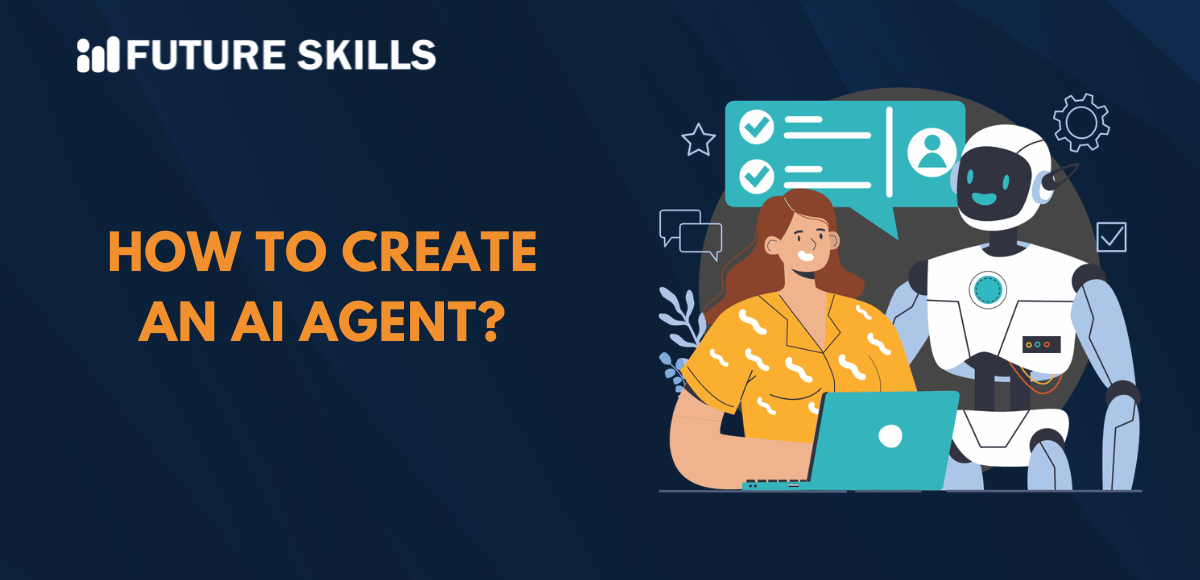

The advancements in the field of artificial intelligence have caught the attention of almost every industry and the latest phenomenon to watch out for right now is agentic AI. Businesses have discovered an exclusive opportunity to create an AI agent and train it to work independently on custom workflows. Agentic AI has set new milestones in the journey of bridging the gap between our expectations and performance of AI systems.
- One report by McKinsey shows that 62% of organizations are trying new experiments with AI agents (Source).
- The estimated annual economic value expected from AI agents in the United States alone is almost $2.9 trillion (Source).
- Almost 45% of organizations will incorporate AI agents at scale in all business functions by 2030 (Source).
AI agents have the potential to revolutionize almost any industry that you can think of and many businesses have taken note of this. You can find organizations investing heavily in experiments with AI agents to revolutionize their traditional workflows and achieve better efficiency. The best thing about AI agents is that they work with minimal human intervention. Learning how to build AI agents from scratch can be a valuable skill for professionals who want a career in AI.
Gain in-demand skills to manage agentic AI workflows across the full AI agent lifecycle with the Certified AI Agents Manager (CAIAM)™ Certification
Things You Need to Know to Create an AI Agent in 2026
The curiosity to learn how to build AI agents from scratch will obviously make you think about the steps first. However, it is important to know some things about agentic AI, such as the core components in a custom AI agent and its capabilities, before you create one. AI agents are computer programs that help with automation of traditional workflows and creation of new automated workflows that run with minimal human intervention.
Creating an AI agent is like developing a bot that can solve the problems for which it was designed without frequently asking for your suggestions. You can think of many ways in which AI agents can transform how businesses operate, primarily with workflow automation. The problem with creating AI agents is that many people ignore the basics of agentic architecture or the components of AI agents.
What do you need to create the perfect AI agent for your needs?
-
Instructions and Not Just Prompts
The most crucial thing about AI agents is that they also need instructions like language models. However, creating an AI agent is different from training LLMs as instructions for AI agents work as contracts that define their behavior. You should think of instructions as the manual for the AI agent that defines what it must do and the actions it should avoid.
Developing a custom agent requires simple instruction structure to ensure stability in its behavior. You have to establish the scope of the agent along with constraints and rules for utilizing tools in their workflows. In addition, the instructions must also clearly state when the agent should ask for human intervention and the definition of completed tasks. It is also important to add missing information rules to prevent the agent from using guesswork or being stuck in a loop.
-
Tool Usage
One of the biggest and most stark highlights in the working of AI agents is their capability to use external tools. You can pick any AI agent and notice that it can access external tools with the help of APIs. However, you should also know that tools are not vague functions or libraries that you have to include in your agent’s design.
Agent developers should design tools with clear naming that reflects their actions and provide accurate examples of inputs and outputs. Developers wondering about how to create an AI agent from scratch must also specify explicit parameters with the desired formats. In addition, the definition of tools should also include error messages and the desired response and reasoning of the agent.
-
Context, State and Memory
The next important thing that every AI agent developer should keep in mind is the difference between context, state and memory. As a matter of fact, many developers mix up these concepts and end up with bloated prompts and erratic behavior. Context refers to the instructions and conditions you pass in the current prompt while memory represents the facts that you can use later. The state in AI agents stands for variables associated with the current task, including IDs and flags.
The best practices for developing AI agents call for maintaining minimal memory storage focused only on stable facts. You can rely on retrieval mechanisms to gain access to referenced information in documentation or policies. As a result, you can not only reduce drift but also keeps the agent’s responses grounded.
Learn artificial intelligence with our structured AI Certification Course and explore new career opportunities.
Roadmap to Create an AI Agent in Simple Steps
The functionalities of AI agents have brought them into the limelight and you can also create your own agent now. With the help of a few steps, you can develop AI agents for your automation needs and make the most of agentic AI capabilities.
1. Defining the Purpose and Scope of the Agent
The first step in building an AI agent begins with clear definition of what you want to achieve with it. You have to identify the tasks and functions it has to perform and specify the problems you want to solve. Subsequently, you must define your target audience and their expectations from the AI agent you are creating. As an AI agent developer, you should also point out the use cases in which your AI agent will be the most useful. The purpose and scope of the agent will provide a basic outline for the features and capabilities of your agent.
2. Collecting and Preparing the Training Data
AI agents learn from data and you need the best quality of training data to create agents that can accurately understand user inputs and deliver relevant results. You can create an AI agent only when you have the data that reflects the type of interactions the agent will have with users. The ideal sources of training data include text transcripts from chat logs, support tickets or emails, voice transcripts and interaction logs. Developers must also clean the data by removing irrelevant points and errors alongside labeling data with tags and metadata.
3. Selecting the Ideal Machine Learning Model
The machine learning model underlying your AI agent will have a huge impact on the agent’s effectiveness. Agentic AI developers must pay attention to the functions and tasks they want the agent to perform and choose the relevant machine learning model. You can think of neural networks as the ideal models in scenarios where the agent has to understand and respond in human-like language. The choice of machine learning model for AI agents also depends on the type of training data collected for the agent.
Gain a solid foundation in machine learning with Machine Learning Essentials Course, understand the real-world impact of various ML techniques, and build the skills to apply predictive analytics and optimization effectively.
4. Training the AI Agent
The actual process of building your custom AI agent starts with training the machine learning model with the training data. This is the most significant step as the AI agent will learn from examples and how to perform tasks independently. You can begin by setting up the machine learning environment, loading your data and splitting the data into two sets. After the initial setup, you can choose the model you think will be the best choice for training the agent. Developers must also ensure complete configuration of training parameters and train the model with continuous monitoring.
5. Testing and Validation of the AI Agent
Developers must also check whether their AI agent works according to their expectations and achieves the desired goals. Testing and validation will help you identify and resolve any issues before completely deploying an AI agent. You can run the AI agent on a series of tasks or queries and note its responses to measure efficiency. The ideal testing methods for AI agents include unit testing, user testing and A/B testing. Each testing method will offer a glimpse of your agent’s performance from a specific perspective.
Final Thoughts
The steps to create your own AI agent may look challenging from the outset, especially for beginners. However, you can use professional training in agentic AI to your advantage and strengthen foundational understanding before building AI agents. Anyone can create AI agents from scratch with the right guidance and commitment to learn about agentic AI. Discover the best resources to enhance your knowledge of AI agents and build your first AI agent now.
FAQs
How can I create an AI agent for customer service automation?
You can create an AI agent for customer service automation by focusing on developing an active assistant with system-wide integration. The ideal solution is a phased approach in which you prioritize data integration, human oversight and guardrails rather than complexity.
What are the essential steps to create an AI agent?
The first step to create an AI agent involves defining the purpose and scope of the agent. You should also focus on collecting and preparing the training data for your AI agent. The next step focuses on choosing the ideal machine learning model for your AI agent and training on collected data. After completing these steps, you have to test and validate the AI agent before deploying it.
What platforms offer tools to build AI agents without coding?
You can rely on AI agent frameworks and tools to build AI agents without coding. The best no-code tools for building AI agents include Lindy, Dust and Relevance AI. Developers can also choose platforms like BeeAI and AutoGPT for creating AI agents without intensive coding.
What skills are taught in professional AI agent certification programs?
Professional AI agent certification programs help you learn about the fundamental concepts of agentic AI. You can think of examples like Certified AI Agents Manager (CAIAM)™ certification by 101 Blockchains to identify other crucial skills you can learn in AI agent certification programs. The certifications focus on agentic AI architecture, AgentOps and real-world applications of agentic AI.
About Author

James Mitchell is a seasoned technology writer and industry expert with a passion for exploring the latest advancements in artificial intelligence, machine learning, and emerging technologies. With a knack for simplifying complex concepts, James brings a wealth of knowledge and insight to his articles, helping readers stay informed and inspired in the ever-evolving world of tech.